What should a window quotation include?
A plain-English checklist for clear window quotations: item descriptions, fitting scope, prices, revisions and the next step.
 Fenora Team5 min read
In this guide
A customer should be able to read your quotation and understand what they are buying, what is included and what still needs checking. Your office should be able to open the same document a few weeks later and reach the same conclusion.
That sounds straightforward. In practice, a quotation can lose important detail between the first phone call, a site photograph and a supplier price. A note such as “white windows throughout” is not enough when there are different opening styles, finishes or fitting arrangements.
This guide is a practical way to check a window quotation before it goes out. It is not a set of legal terms or a replacement for a proper technical specification.
Put the job details at the top Start with the customer name, the installation address and a clear quotation reference. If the customer lives somewhere else, distinguish their contact address from the property where the work will happen. Include the date and revision so an older attachment cannot easily be mistaken for the current offer.
Give the customer a useful contact route for questions. For a larger job, name the person coordinating the quotation. Avoid making the customer explain the entire project again whenever somebody else answers the phone.
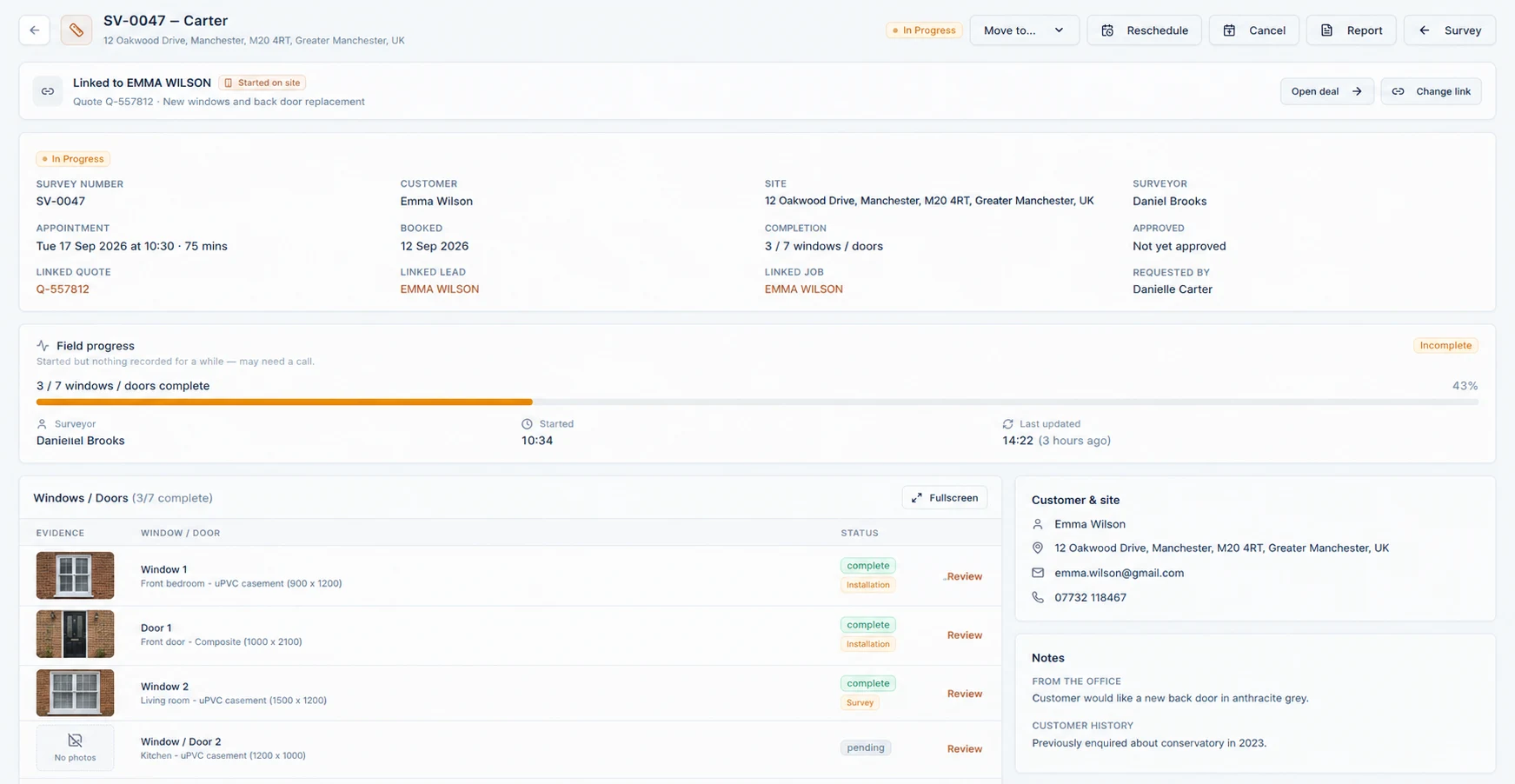
If the price is based on drawings or information supplied by another person, identify those documents. “Based on schedule dated 12 October” is much clearer than “as discussed”.
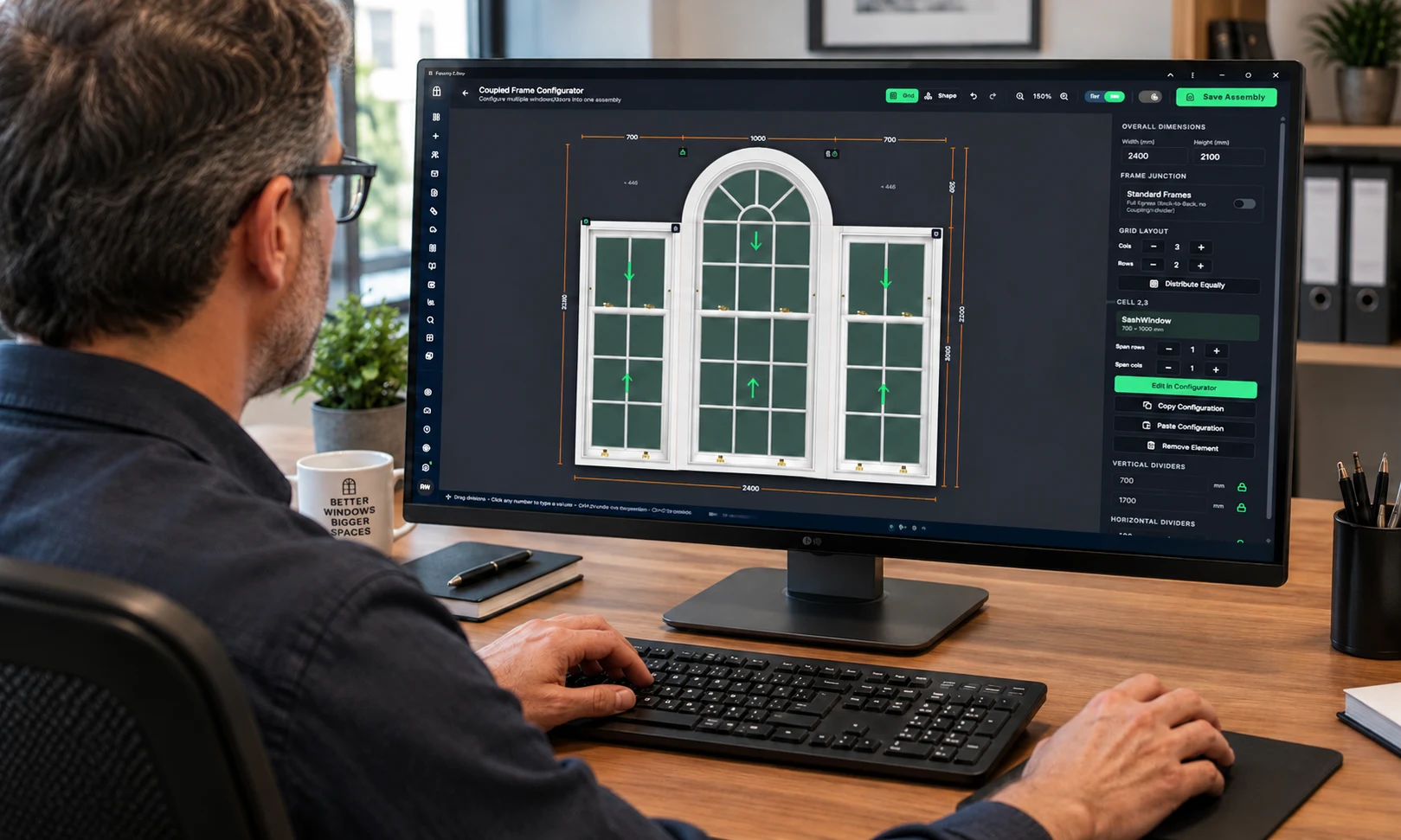
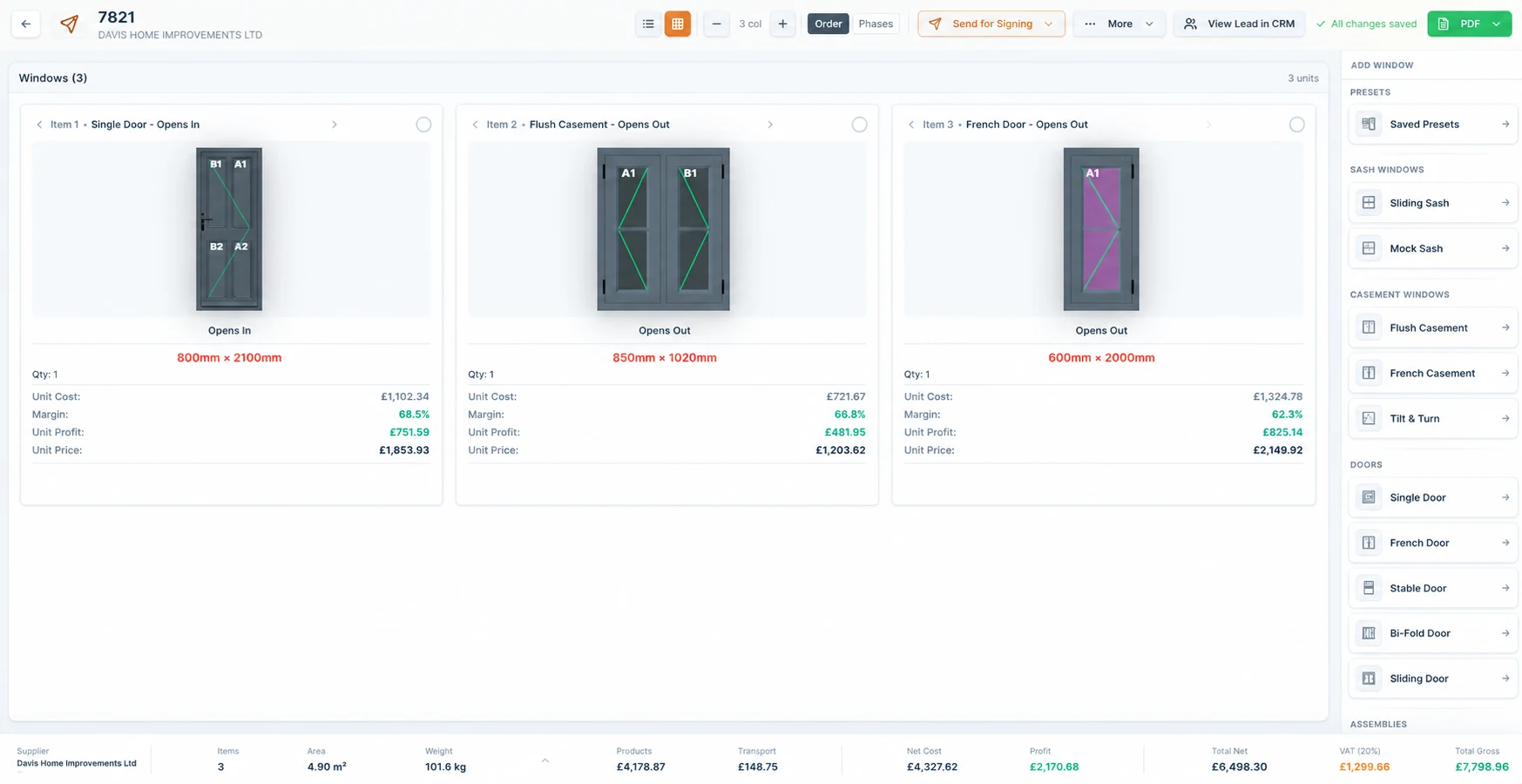
Describe each window clearly Use an item reference that can follow the window through survey, ordering and installation. Explain where it belongs, the product type, the intended opening arrangement and the main finish choices. If inside and outside finishes differ, say so rather than relying on a colour name alone.
Dimensions need context. Explain whether they are indicative sizes for pricing or verified dimensions for ordering. A quotation should not accidentally turn an early customer measurement into an instruction to manufacture.
Record relevant choices such as glazing, handles, vents and decorative details in a way the customer can understand. A product code may help your supplier, but pair it with a plain description where needed. Refer technical performance questions to the correct product information rather than guessing.

Separate supply, fitting and other work Make the scope visible. Does the price include removing the old frames, fitting the new ones, taking waste away and making good? Are decorations, access equipment or changes to surrounding finishes included? Different businesses offer different packages, so never assume the customer knows yours.
Where something is excluded, write it next to the relevant work. A clear exclusion near the installation description is easier to find than a short phrase buried at the end of a long document.
If access or the condition of the opening is still unknown, explain what needs checking and how any resulting change will be dealt with. Do not turn an uncertainty into an invisible allowance that only the estimator understands.
Make the price easy to follow Show the price in a consistent way, including how applicable VAT is presented. If there are optional extras, distinguish them from the items already included in the total. Two prices labelled only “Option A” and “Option B” can be difficult to compare unless the difference in specification is also shown.
Explain any payment stages and when they become due, using terms that have been properly reviewed for your business and type of customer. Do not add a standard deposit percentage just because another firm uses it.
State how long the offer remains open and identify anything that could affect the price before acceptance. Avoid promising a fixed delivery or installation date unless the business has actually agreed it and can support that commitment.
Explain what happens after acceptance A customer may think accepting the quotation means everything is ready to order. Your team may still need a technical survey, finish approval or access check. Spell out that next step.
Make clear which document is being accepted. If you issue a revised quotation, explain whether it replaces the previous version and highlight the important changes. Keep the earlier version in the job record rather than quietly overwriting it.
For contracts, cancellation rights and other legal wording, get advice appropriate to the transaction and where you work. A tidy quotation does not remove your obligations to the customer.
Check it as someone outside the office Before sending, ask a colleague to read the quotation without the benefit of your conversations. Can they identify the property, the items, the finish, the fitting scope, the total and the next step? If not, the customer is likely to have the same questions.
Check that photographs and drawings use matching item references. Open the actual customer attachment, not just the record used to create it. Look for clipped descriptions, an old revision in a footer or an optional item accidentally included in the total.
Before you send - Correct customer, property, quotation reference and revision. - Each item described and linked to the right location. - Pricing dimensions clearly distinguished from ordering dimensions. - Supply, fitting, exclusions and optional work explained. - Price, applicable VAT, payment stages and offer validity checked. - Next step and outstanding approvals made clear.
The aim is not a longer quotation. It is a quotation that can be understood without a second conversation to explain what the first one meant.
Fenora TeamPractical notes for window and door businesses.Have a correction or a question about this guide? Email the Fenora team and include the article title.
- Quoting / 4 min read
How to manage changes without losing the original specification
Record a window order variation clearly: preserve the original, describe the difference, review the cost and release the approved change.
- Quoting / 4 min read
Quotation or estimate? Make the basis of your price clear
Explain provisional information, options and next steps in window pricing, rather than relying on a document label to do all the work.
- Surveying / 4 min read
How to prepare a window survey checklist
Organise a window survey record around clear opening references, measurements, photographs, decisions and outstanding actions.